

The hidden productivity drain costing field sales managers revenue every single day — and the practical steps to get it back.
You hired good people. You gave them a territory. You set a target. And yet, at the end of each quarter, there’s a nagging sense that your field sales team is leaving something on the table.
It’s rarely a motivation problem. In most cases, it’s a systems problem — and one of the biggest culprits is hiding in plain sight: how your reps are spending their time between customer visits.
This article is for sales managers who want to understand where field productivity actually breaks down, and what to do about it.
| Less than 30% of a field sales rep’s working week is typically spent on actual face-to-face selling |
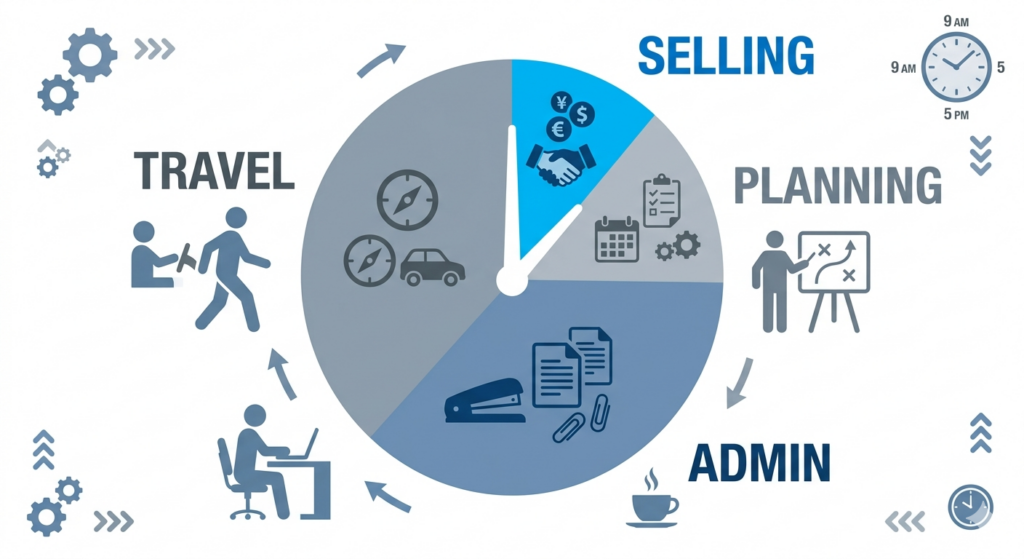
Let that sink in. The rest goes to travel, admin, scheduling, reporting, and chasing information. If you’re managing a team of six reps, you’re effectively getting fewer than two full-time sellers in terms of productive selling hours.
The Productivity Problem Nobody Talks About
Ask most sales managers where their team loses time and they’ll point to the usual suspects: too much admin, slow lead qualification, long sales cycles. These are real problems. But there’s a more fundamental issue that sits upstream of all of them.
Field sales reps are, at their core, logistics problems. They need to be in the right place, at the right time, in front of the right person. When that coordination fails — even slightly — the knock-on effect is significant.
Here’s what poor field sales productivity actually looks like day-to-day:
- A rep drives 40 minutes to a meeting, only to find the contact isn’t available
- Two high-value accounts in the same area are visited a week apart instead of on the same day
- A rep spends the first hour of the morning figuring out who to visit and in what order
- A promising lead goes cold because the rep didn’t have a nearby visit to justify the journey
- A manager has no clear picture of what their team actually accomplished in the field last week
None of these feel catastrophic in isolation. But multiplied across a team and a full year, they represent a substantial loss of revenue-generating time.
The Four Root Causes of Poor Field Sales Productivity
1. Reactive Scheduling
Many field sales teams still plan their days reactively — responding to who calls in, who’s due a visit by memory, or simply visiting whoever is geographically convenient. There’s no systematic process for ensuring that the highest-value accounts get the most attention.
The result is a team that stays busy but isn’t necessarily working on the right things. Activity gets mistaken for productivity.
2. Inefficient Route Planning
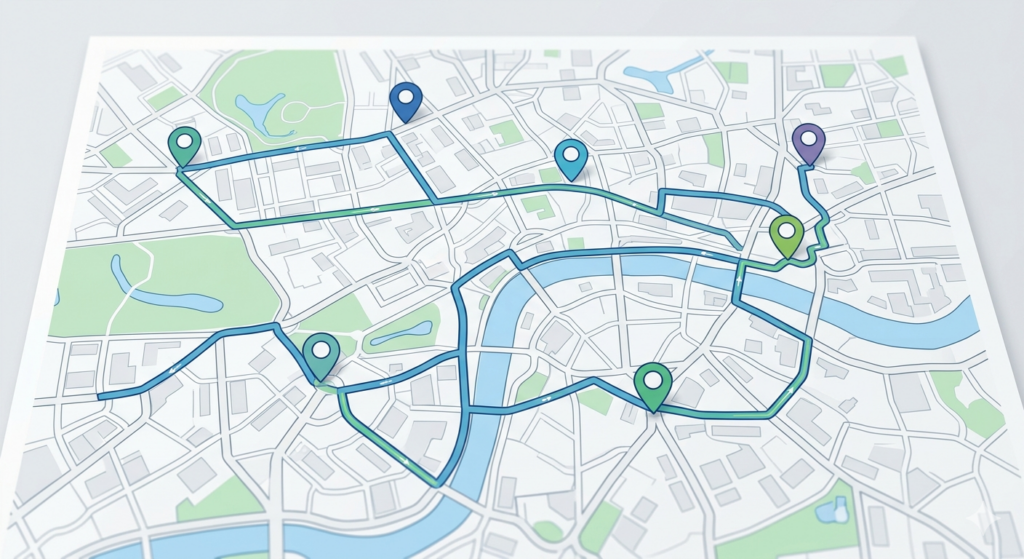
This is the single biggest time thief in field sales, and it’s largely invisible. When reps plan their own routes without dedicated tools, they typically underestimate travel time, create unnecessary backtracking, and fail to cluster nearby accounts into the same day.
The difference between a poorly planned route and an optimized one can easily be one to two additional customer visits per day — without the rep working any harder or longer.
3. Disconnected Data
Reps in the field often make decisions without access to the full picture. Which accounts are due for renewal? Which prospects engaged with a marketing email this week? Which customers haven’t been visited in 90 days? Without that information at their fingertips, reps default to visiting whoever they already have a relationship with — not necessarily who needs attention most.
4. Admin Overhead
Post-visit reporting, mileage logging, updating the CRM — these tasks are essential, but they eat into selling time. When they’re done manually, they’re also done inconsistently, which means managers lose visibility and reps lose time.
| The compounding effect A rep who visits one extra customer per day, five days a week, adds 250 additional customer touchpoints per year. If even 10% of those convert or expand, the revenue impact is significant — without hiring a single additional person. |

What High-Performing Field Sales Teams Do Differently
The gap between an average field sales team and a high-performing one usually isn’t talent. It’s process and tooling. Here’s what separates the two:
They prioritize visits by value, not habit
Top-performing teams treat customer visits as investments. Before planning any route, they review which accounts represent the biggest current opportunity — whether that’s an upcoming renewal, an active deal nearing close, or a key prospect who’s recently shown buying signals. Visit priority is data-driven, not gut-driven.
They cluster geographically
High-performing reps plan their week in zones. Monday might be the north of the territory, Tuesday the city center, Wednesday the south. This simple discipline dramatically reduces dead miles and creates space for opportunistic visits when a nearby meeting ends early or a last-minute prospect requests a call.
They use route planning tools
The best field sales teams don’t plan routes with Google Maps and a spreadsheet. They use dedicated sales route planning software that sequences stops intelligently, accounts for realistic travel and meeting times, and flags when the schedule becomes unworkable. This frees reps to focus on the meetings themselves, not the logistics of getting there.
They capture data from the field in real time
Rather than leaving CRM updates until Friday afternoon, high-performing reps log visit outcomes immediately after each meeting — often via a mobile app while still in the car park. This keeps the data fresh, reduces admin burden, and gives managers an accurate real-time picture of territory activity.
They review and adapt regularly
Weekly territory reviews — even a short 15-minute check-in — give managers and reps a chance to spot patterns, adjust priorities, and plan the following week with purpose. Teams that do this consistently outperform those that treat planning as a monthly exercise.

The Role of Route Planning in Field Sales Productivity
Of all the levers available to a field sales manager, route planning is one of the most underestimated. It doesn’t require a culture change, a restructure, or a lengthy implementation. It’s a relatively simple operational improvement that delivers measurable results quickly.
A good sales route planner does several things simultaneously:
- Sequences visits to minimize travel time and maximize the number of stops
- Surfaces priority accounts based on deal data, so reps know who to see first
- Adapts in real time when meetings change, or new opportunities emerge
- Logs activity automatically, reducing admin overhead for reps
- Gives managers visibility into what’s happening in the field without constant check-ins
The downstream effect on productivity is consistent: reps spend more time in front of customers, less time driving and planning, and managers have the data they need to coach effectively.
| Worth knowing Sales teams that adopt structured route planning typically report a meaningful reduction in unplanned downtime and an increase in daily customer visits — often without adding headcount or extending working hours. |
A Practical Framework for Improving Field Sales Productivity
If you’re a sales manager looking to move the needle, here’s a straightforward framework to start with:
- Audit how your team currently plans their days. Ask each rep to walk you through their last week. Where did time go? How did they decide who to visit? You’ll likely find significant variation across the team.
- Define your visit prioritization criteria. Agree as a team on what makes an account worth a visit this week — deal stage, account value, days since last contact, or a combination. Make this explicit rather than leaving it to individual judgement.
- Introduce geographic clustering. Even without specialist software, reps can plan their weeks in zones. This single change typically recovers 30–60 minutes of travel time per day.
- Adopt a dedicated sales route planner. Once the process is in place, the right tool automates and optimizes it — freeing reps from manual planning and giving managers the visibility they need.
- Measure what changes. Track visits per day, pipeline progression from field calls, and mileage before and after. The data will tell you what’s working and where to focus next.
Final Thought
Field sales productivity isn’t a mystery. It’s a function of how well your team’s time is organized, how clearly priorities are communicated, and how effectively the logistics of getting from one place to another are managed.
The good news is that the gap between where most teams are and where they could be is bridgeable — not through heroic effort, but through better process and the right tools. Start with the basics, measure the impact, and build from there.
Your reps want to sell. Your job as a manager is to remove the friction that gets in the way.